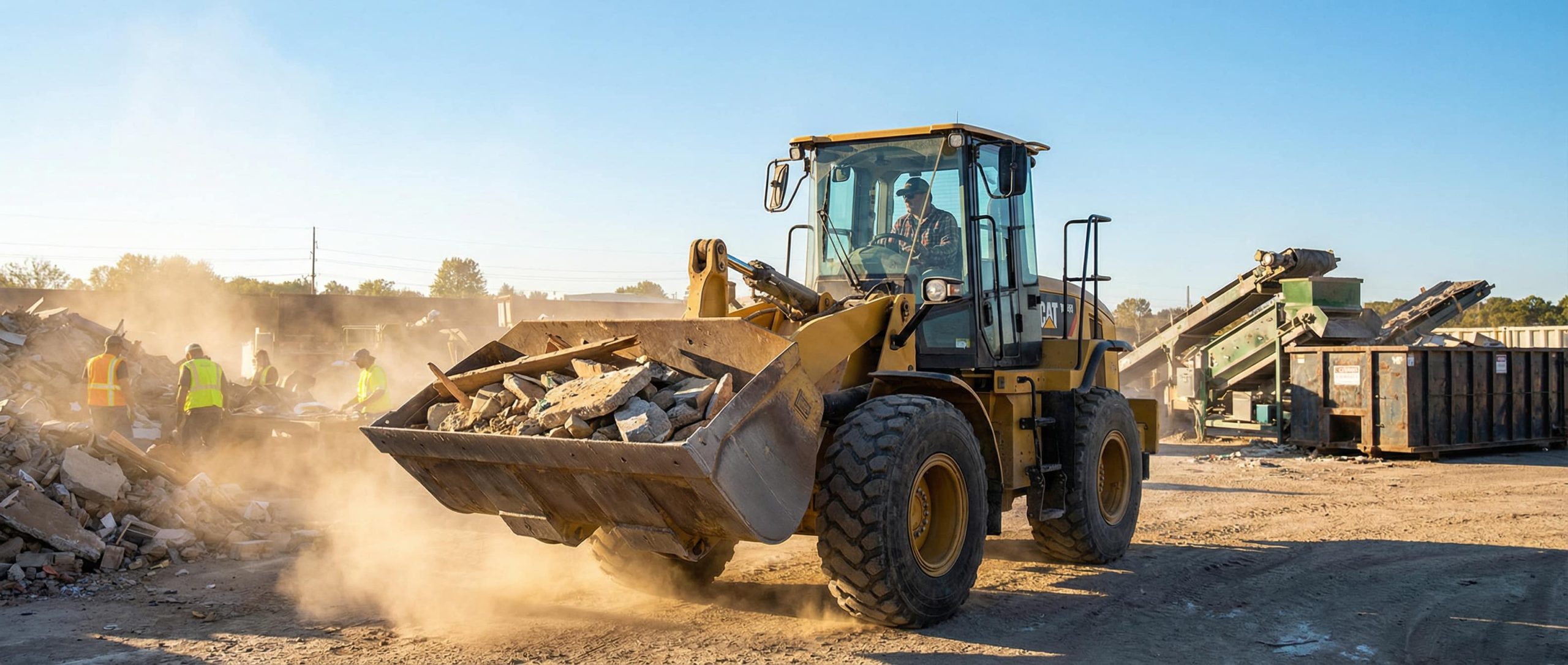
Waste management is an industry built around protecting public health and the environment. Yet the people working at the heart of these operations are often exposed to airborne hazards every day. Whether operating compactors, wheel loaders, excavators, shredders, or material handlers, machine operators frequently work in dusty environments where airborne contaminants can have a serious impact on both health and productivity.
For many organisations, investing in a waste management cab filtration solution is initially viewed as a health and safety measure. However, when the full business impact is considered, modern filtration systems deliver far more than operator protection alone. They can improve machine uptime, reduce maintenance costs, support compliance, and help businesses create a safer and more productive working environment.
The result is a measurable return on investment that extends well beyond the initial purchase price.
Why Cabin Air Quality Matters
Waste transfer stations, recycling facilities, composting sites, and landfill operations all generate airborne contaminants. Operators are regularly exposed to respirable dust, silica dust, gases, pollen, debris, and fine particulate matter. Even inside an enclosed cabin, these contaminants can enter through ventilation systems, worn seals, and small gaps around doors and windows.
Over time, poor cabin air quality can create serious health risks. Exposure to airborne contaminants may contribute to respiratory problems, fatigue, irritation, and reduced concentration. For employers, this can result in increased absenteeism, lower productivity, and higher staff turnover.
As labour shortages continue to challenge the waste management industry, protecting operator health is becoming increasingly important. Healthy operators are more productive, more engaged, and less likely to require time away from work due to exposure-related issues.
How Cab Filtration Systems Deliver ROI
The return on investment of a cab filtration system comes from multiple areas of the business rather than a single cost saving.
The most immediate benefit is improved operator protection. By supplying clean air and reducing exposure to contaminants, filtration systems help create a healthier working environment. This can contribute to fewer health-related complaints, improved operator comfort, and greater productivity throughout the working day.
The second benefit is reduced maintenance. Waste management equipment operates in dusty environments where standard HVAC systems can quickly become overwhelmed. Dust and debris can restrict airflow, reduce efficiency, and increase wear on critical components. By reducing the amount of contamination entering the system, dedicated air filtration helps protect equipment and supports longer filter life.
The third benefit is increased uptime. Every hour of downtime represents lost productivity and additional operating costs. Cleaner airflow and better protection for HVAC components help reduce unexpected maintenance requirements and keep machines operating efficiently. Across an entire fleet, even small improvements in availability can generate significant savings over time.
When these factors are combined, the financial impact becomes clear. A cab filtration system is not simply an expense—it is an investment in operational performance.
HEPA Filtration and Positive Pressure: The Key to Maximum Protection
Not all air filtration systems provide the same level of protection.
In waste management environments, operators are exposed to extremely small particles that standard filters may struggle to capture effectively. This is why HEPA filtration is so important. Certified HEPA filters remove 99.97% of particles measuring 0.3 microns, including fine dust, silica dust, and other harmful particulate contaminants commonly found on waste management sites.
However, filtration alone is not enough.
If contaminated air can still enter through small openings in the cabin, operators remain exposed. Advanced protective ventilation systems address this by creating positive pressure inside the enclosed cabin. By continuously supplying filtered fresh air, the system creates higher air pressure inside than outside. This prevents contaminants from entering through gaps, seals, or other leakage points.
The combination of HEPA filtration and positive pressure provides maximum protection while maintaining consistently high air quality throughout the shift.
Beyond Safety: A Business Advantage
The waste management industry is becoming increasingly focused on efficiency, sustainability, and workforce wellbeing. As a result, companies are looking beyond traditional health and safety measures and evaluating how investments contribute to broader business objectives.
Cab filtration systems support these goals in several ways. Improved operator comfort can help reduce fatigue during long shifts. Cleaner cabin air contributes to a more pleasant working environment. Reduced exposure to contaminants demonstrates a commitment to employee wellbeing and can strengthen a company's reputation as a responsible employer.
At the same time, lower maintenance costs and improved equipment performance help improve operational efficiency. These benefits may not always appear on a single invoice, but they contribute significantly to the overall return on investment.
For many waste management businesses, the question is no longer whether air filtration is necessary. The question is how much value a high-quality filtration system can deliver over the lifetime of the equipment.