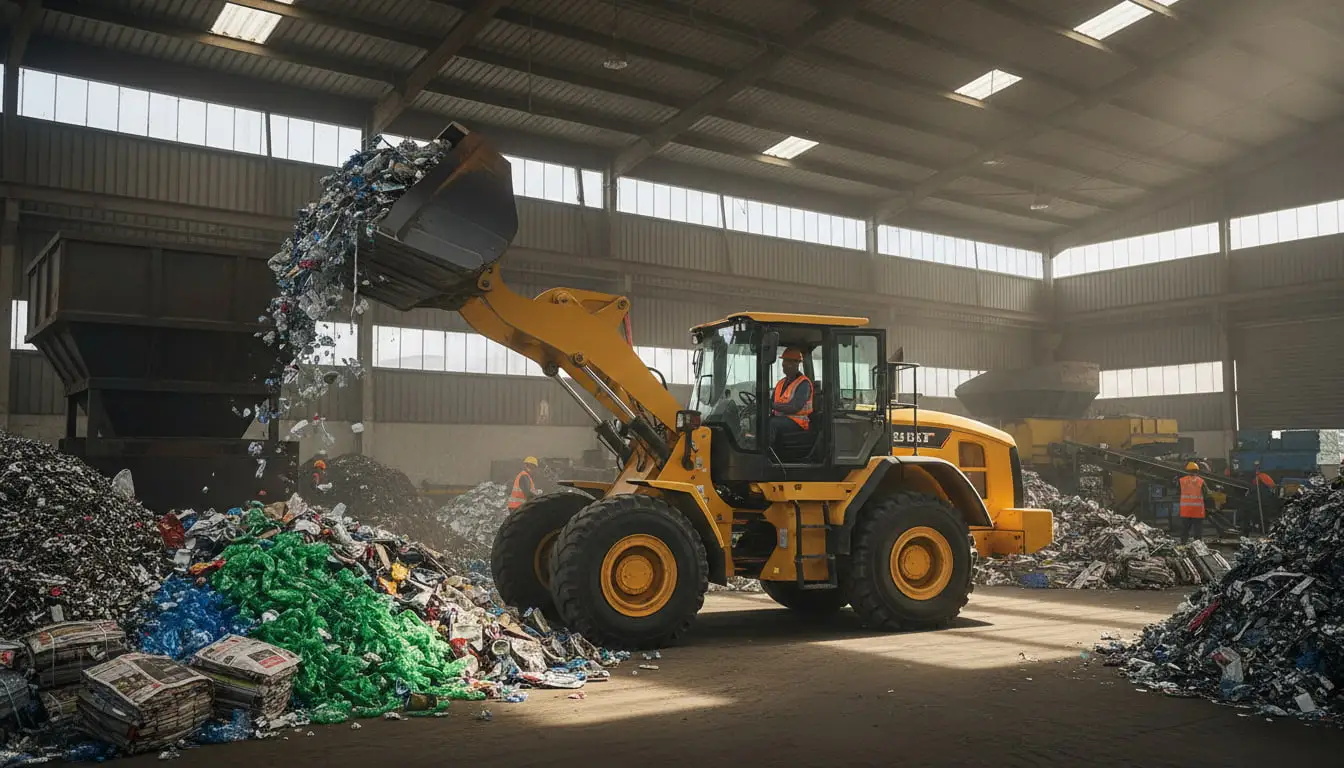
COSHH waste and recycling UK compliance is not optional. Under the Control of Substances Hazardous to Health Regulations, employers operating waste transfer stations, recycling plants and construction waste sites have a legal requirement to assess and control exposure to hazardous substances.
From Respirable crystalline silica (RCS) to biological agents and airborne contaminants released during work processes, waste and recycling environments present multiple health risks. Failure to ensure compliance can lead to enforcement action from the Health and Safety Executive (HSE), long-term ill health among workers and significant legal liability.
This guide explains what UK employers must do to comply with COSHH regulations in waste and recycling facilities — and how engineering controls can help protect workers from serious health issues.
What Is COSHH and Why It Matters in Waste & Recycling?
The Control of Substances Hazardous to Health (COSHH) Regulations require employers to prevent or adequately control exposure to hazardous substances. In waste and recycling operations, these substances are often generated during material handling, crushing and mechanical processing activities.
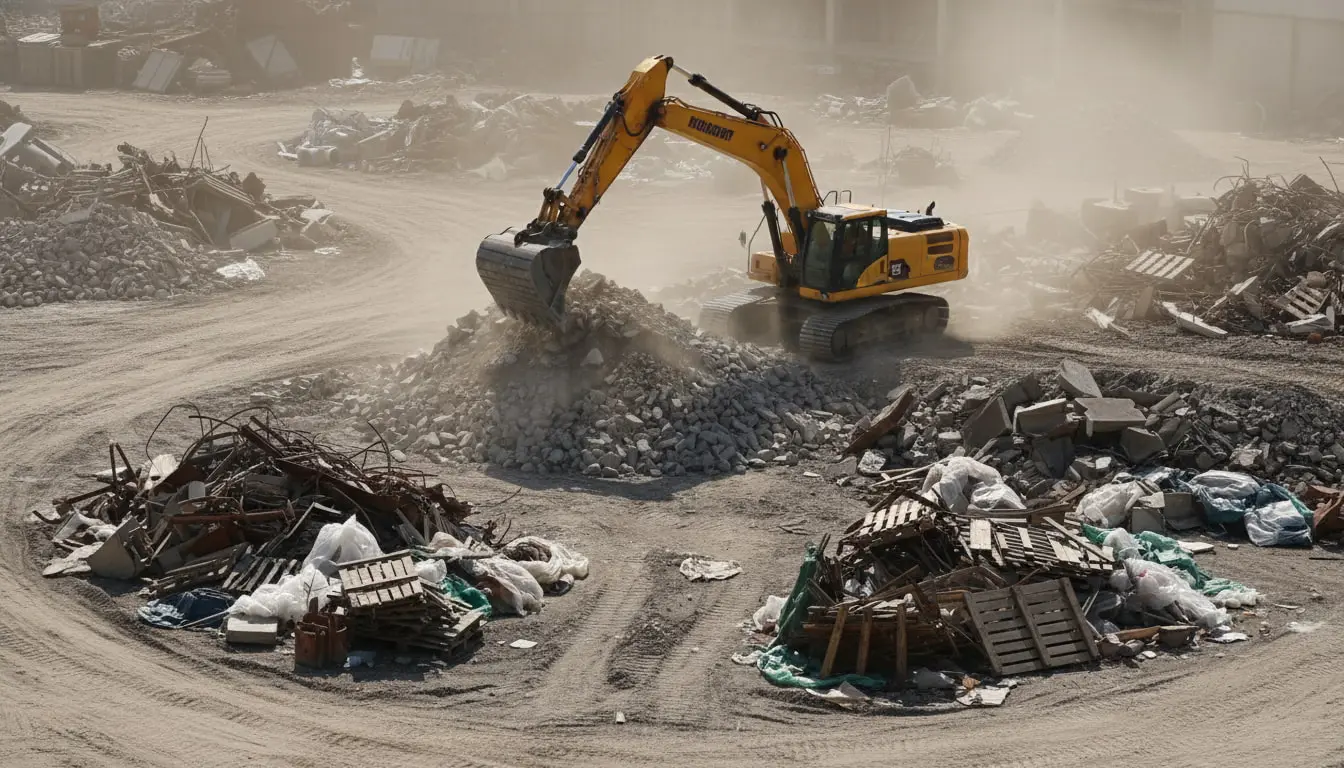
One of the biggest risks is respirable crystalline silica (RCS). Silica is a naturally occurring mineral found in materials such as concrete, bricks, stone and aggregates. When these materials are cut, crushed or screened, fine silica dust can become airborne.
Unlike asbestos, which is managed through strict removal procedures, silica is present in many everyday construction and demolition materials. As a result, controlling silica dust exposure can be particularly challenging in environments where visible dust clouds are generated during crushing, screening or concrete processing activities.
Exposure to respirable crystalline silica can lead to serious long-term health effects, including silicosis, COPD and lung cancer. Under COSHH regulations, employers must reduce exposure as far as reasonably practicable and ensure the Workplace Exposure Limit (WEL) is not exceeded..
Understanding Silica Dust Exposure and Workplace Exposure Limits
Respirable crystalline silica dust is classified as a substance hazardous to health because prolonged exposure can harm health and cause irreversible lung damage.
The workplace exposure limit for respirable crystalline silica is 0.1 mg/m³ as an 8-hour time weighted average. This maximum amount is not a safe target — it is the legal limit that must not be exceeded.
- Exposure to silica dust is associated with serious health risks, including:
- Chronic obstructive pulmonary disease
- Lung cancer
- Chronic silicosis
- Other irreversible respiratory diseases
Exposure to silica dust can occur during many work processes, including foundry work, crushing construction materials, recycling aggregates and sanding concrete. Even short-duration tasks can generate high dust levels if control measures are not in place.
Employers must assess how much silica dust workers are exposed to and implement engineering controls to reduce exposure as far as reasonably practicable.
COSHH Risk Assessment: A Legal Requirement
Under COSHH regulations, duty holders must carry out a suitable and sufficient risk assessment.
A compliant risk assessment must:
- Identify hazardous substances present on site
- Assess the risk of exposure to workers
- Evaluate dust exposure levels and airborne dust concentrations
- Consider prolonged exposure and past exposure
- Identify appropriate control measures
In waste and recycling facilities, this includes assessing exposure to silica dust, fine dust, bioaerosols and other substances hazardous to health generated during processing.
The Health and Safety Executive expects employers to document findings, implement control measures and review them regularly to ensure compliance.
Controlling Exposure: The Hierarchy of Control
COSHH follows a structured hierarchy of control. Employers must prioritise elimination and engineering controls before relying on respiratory protective equipment RPE.
In waste and recycling environments, effective control measures may include water suppression to prevent dust generation at source, local exhaust ventilation to capture airborne dust, enclosed systems to prevent dust release and process modifications to reduce dust levels.
Where exposure cannot be fully controlled, respiratory protective equipment must be provided. However, respiratory protective equipment RPE is considered the last line of defence and should not replace engineering controls.
The objective is always to reduce exposure and protect workers from harmful airborne substances.
Health Surveillance and Monitoring
Where workers are exposed to respirable crystalline silica (RCS) or other hazardous substances, COSHH regulations require appropriate health surveillance.
Health surveillance is intended to identify early signs of respiratory disease before permanent lung damage develops. Depending on the level and duration of exposure, this may include lung function testing, respiratory questionnaires and periodic medical assessments.
Exposure monitoring is also a critical part of compliance. Employers must assess airborne dust concentrations and compare measured levels against the Workplace Exposure Limit (WEL).
Compliance cannot be based on assumptions alone. Employers must be able to demonstrate, through recorded monitoring data and validated control measures, that airborne silica concentrations remain below legal exposure limits and that protective measures continue to perform effectively.
The Hidden Compliance Gap: Exposure Inside Machine Cabins
Many waste and recycling companies focus heavily on controlling dust in open work areas while overlooking exposure risks inside machinery cabins.
Activities such as crushing, screening and material handling generate airborne dust that can enter enclosed cabins through ventilation systems, inadequate sealing and repeated door openings. Over time, respirable dust and crystalline silica particles can accumulate inside the operator environment.
This creates a significant occupational health and compliance risk. Even when external dust suppression systems and local exhaust ventilation are in place, airborne dust concentrations inside the cabin may still exceed Workplace Exposure Limits (WELs).
For machine operators working in waste, recycling and material processing environments, prolonged exposure inside contaminated cabins can contribute to silicosis, chronic obstructive pulmonary disease (COPD), lung cancer and other irreversible respiratory conditions.
Under COSHH regulations, employers are required to assess and control hazardous substance exposure wherever it occurs — including inside enclosed operator cabins and heavy equipment.