Why Silica Dust Is So Dangerous
Exposure to silica dust is not simply a nuisance. Heavy and prolonged exposure to respirable crystalline silica can lead to serious and irreversible health issues.
Silica dust exposure has been linked to:
- Chronic silicosis
- Acute silicosis
- Lung cancer
- Chronic obstructive pulmonary disease
- Kidney disease
- Other serious respiratory diseases
Respirable crystalline silica dust causes inflammation and irreversible scarring of lung tissue. Over time, this scarring leads to reduced lung function, chronic disability and, in severe cases, life-threatening complications.
Early signs of silica exposure may include prolonged coughing and shortness of breath. With continued exposure, workers may experience severe breathlessness, increased risk of lung infections and progressive lung disease. Unlike many other hazardous substances, damage caused by crystalline silica dust cannot be reversed. Past exposure continues to affect workers long after exposure has stopped.
Silica Dust Exposure in Construction Waste Recycling
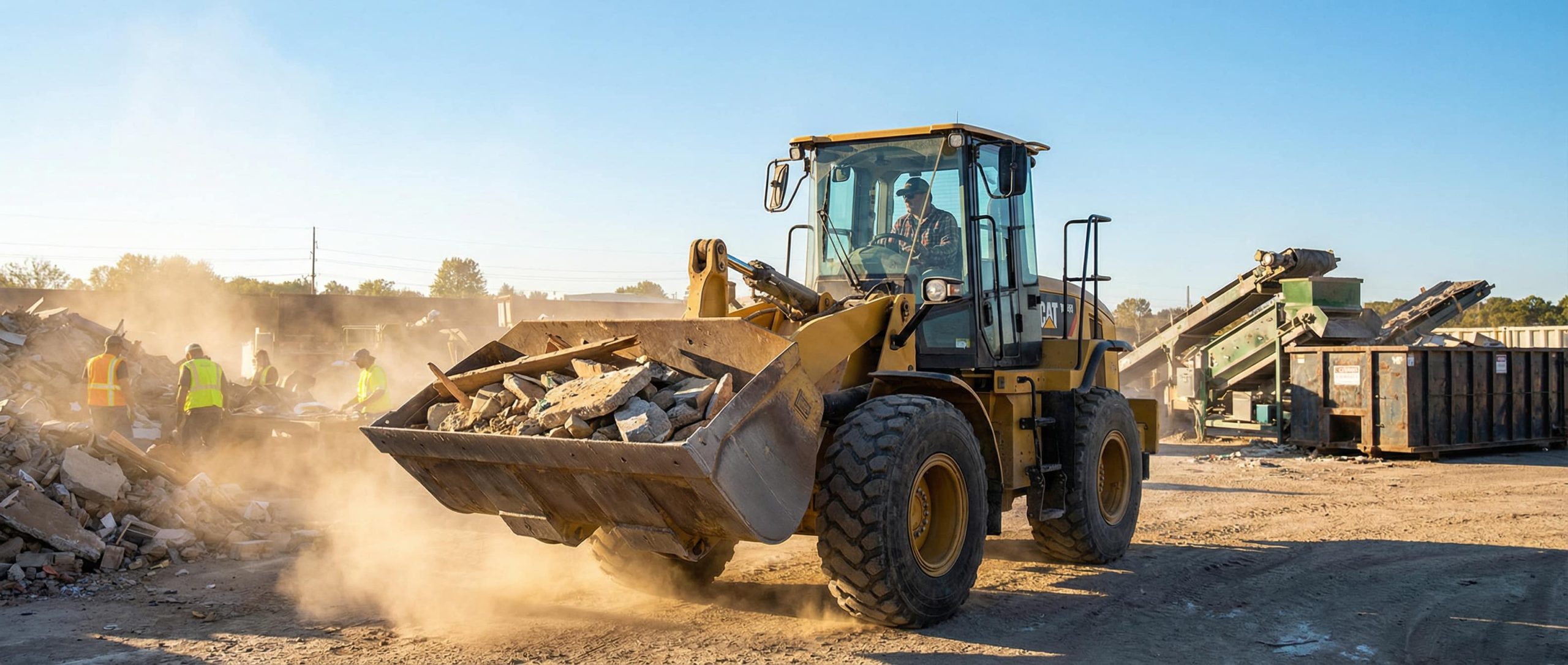
In recycling facilities, silica dust construction waste recycling processes often involve crushing and screening materials that contain high levels of crystalline silica. As these materials break down, fine dust becomes airborne and forms visible dust clouds.
However, the biggest risk does not come from visible dust alone. The most dangerous RCS particles are often invisible to the naked eye. These fine dust particles remain suspended in the air and can accumulate inside machinery cabins, enclosed processing areas and control rooms.
Construction workers and machine operators are particularly vulnerable. Exposed workers may spend hours operating crushers, screeners and loaders in environments where exposure levels fluctuate throughout the day.
Exposure to RCS commonly occurs during crushing and screening concrete blocks and stone, handling silica containing materials, abrasive blasting, surface preparation, and loading or transferring recycled aggregates. Without effective control measures, repeated exposure to silica dust in recycling facilities can exceed workplace exposure limits and significantly increase the risk of long-term ill health.
UK Workplace Exposure Limits and Regulations
In the UK, respirable crystalline silica is classified under substances hazardous to health. The Health and Safety Executive sets a workplace exposure limit (WEL) for respirable crystalline silica dust. The current workplace exposure limit for RCS is 0.1 mg/m³ as an 8-hour time-weighted average.
Under the Control of Substances Hazardous to Health regulations, employers must conduct a suitable risk assessment, implement control measures to reduce exposure, monitor exposure levels, provide health surveillance where required and ensure exposure to silica dust is adequately controlled.
Exposure limits are not targets; they are maximum allowable levels. Employers must reduce exposure to RCS as far as reasonably practicable. Failure to control silica exposure can result in enforcement action and increased liability for occupational lung disease claims.
Controlling Exposure to Silica Dust
Controlling exposure in construction waste recycling requires a structured approach. Relying solely on personal protective equipment is not sufficient.
Water suppression systems can remove dust at source during crushing operations, significantly reducing airborne dust. Local exhaust ventilation systems capture fine dust before it disperses into the wider environment. Enclosed processing areas and routine monitoring of dust levels further support controlling exposure. Whilst these engineering controls reduce general airborne dust, they do not automatically protect operators inside machinery cabins.