

Ammonia is one of the most widely produced chemicals in the world, and it appears across industries ranging from agriculture and refrigeration to waste management and biogas. For HSE managers, fleet managers and business owners operating heavy equipment near ammonia sources, understanding the health effects ammonia can cause and knowing how to control them is not optional. This guide covers the science, the regulations and the practical steps needed to protect operators working in ammonia-rich environments.
Key Takeaways
Ammonia (NH₃) is a colorless gas with a sharp pungent odor that can cause severe eye, skin and lung injury at relatively low concentrations, especially in enclosed or poorly ventilated spaces. It is commonly used in industrial refrigeration, cleaning products, and fertilizers, making it a frequent occupational hazard.
- For HSE and fleet managers, the primary concern is inhalation exposure in and around machinery operating near fertiliser storage, biogas plants, cold stores, manure handling and chemical installations. Ammonia can contribute to the contamination of the air in enclosed environments, putting cabin operators directly at risk.
- Acute exposure to high levels of ammonia can cause rapid onset respiratory distress and ammonia poisoning, while repeated exposure to lower concentrations may lead to chronic respiratory irritation, increased sickness absence and long-term liability.
- Effective control strategies combine process safety, ventilation, personal protective equipment (PPE) and, for machine operators, well-designed pressurised cabins equipped with HEPA and activated carbon filtration plus continuous monitoring systems.
What is ammonia and where are workers exposed in industry?
Ammonia (NH₃) is a highly water-soluble gas with ammonia's pungent odor detectable well before concentrations reach dangerous levels. It is produced industrially on a massive scale for fertiliser synthesis and used as a refrigerant in cold-chain logistics. It is also generated naturally during decomposition of organic matter at composting sites, anaerobic digestion facilities and livestock operations.
- On site, ammonia is identified through Safety Data Sheets (CAS 7664-41-7), warning signage around storage and refrigeration equipment, and its unmistakable smell. Ammonia (NH₃) is used in environments where air quality control is critical, from food-grade cold stores to biogas plants.
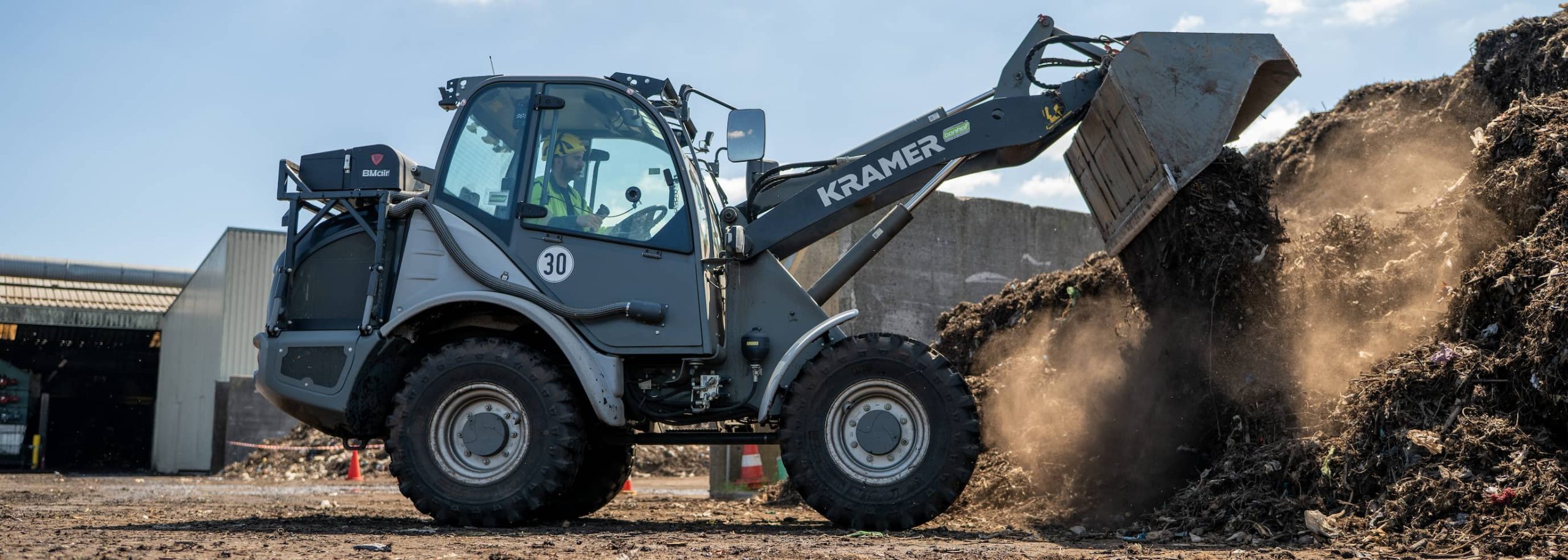
- Common industrial sources relevant to heavy equipment operators include bulk anhydrous ammonia tanks at fertiliser depots, cold-store refrigeration systems, anaerobic digestion and composting plants, landfill gas extraction zones, waste-water treatment works and intensive livestock housing with manure storage.
- Concrete examples include loaders working around 10–30% aqueous ammonia solution tanks at a fertiliser blending plant, excavators on remediation projects disturbing contaminated soils that release trapped ammonia vapor, and material handlers in biogas plants where digester off-gas contains high NH₃ concentrations alongside hydrogen sulphide.
- Ammonia may be present as ammonia gas in air, as pressurized liquid ammonia (anhydrous ammonia stored under pressure as a liquefied gas), or dissolved in water as an ammonium hydroxide solution. Liquid ammonia and anhydrous ammonia gas both present severe hazards depending on concentration, temperature and duration of contact. Even dilute ammonia solutions used in cleaning and blending can generate hazardous ammonia vapor in warm or poorly ventilated conditions.
Ammonia exposure limits and what they mean for HSE managers
Workplace exposure limits define the maximum allowable levels of ammonia that workers can be exposed to over specified time periods. The two key metrics are the time-weighted average (TWA), typically measured over an 8-hour shift, and the short-term exposure limit (STEL), usually a 15-minute average designed to cap peak exposures.
- Ammonia odor is detectable at concentrations as low as 5 ppm for many people. Smelling ammonia on site may already indicate levels of ammonia approaching or exceeding comfort thresholds. However, olfactory fatigue - the progressive loss of smell sensitivity during continuous exposure - means smell alone is never a reliable safety control. Instrumented monitoring is essential.
- HSE managers should check local legal limits such as UK HSE Workplace Exposure Limits (WELs), EU Indicative Occupational Exposure Limits, and OSHA/NIOSH standards in the US. Cabin air quality targets for operators should be set well below these values, ideally below 10 ppm, to provide a margin of safety against toxic ammonia levels.
- Continuous or repeated exposure near or above the TWA, even without acute symptoms, can contribute to chronic irritation, declining lung function, absenteeism and long-term legal liability.
How exposure to ammonia affects the body
Ammonia is a strongly alkaline, water-reactive gas. When inhaled ammonia contacts the moisture lining the eyes, skin and respiratory tract, it readily dissolves to form ammonium hydroxide - a caustic alkali that causes chemical burns and tissue damage. Health effects of ammonia exposure depend on concentration and duration. Symptoms of ammonia exposure may appear within seconds.
- Inhalation effects: Inhalation is the most common route of ammonia exposure. Acute exposure produces a rapid burning sensation in the upper respiratory tract, coughing, chest tightness, shortness of breath, and the risk of laryngeal spasm and acute lung injury. Ammonia exposure can cause respiratory distress and airway obstruction. At a few hundred ppm, significant airway irritation occurs. Inhalation of 2500 ppm ammonia can be fatal within 30 minutes, and high-level ammonia exposure can cause severe airway swelling and respiratory failure. Ammonia exposure can cause corrosive burns and severe irritation across the entire respiratory tract, with the potential to trigger pulmonary edema in severe cases.
- Eye and skin contact: Eye contact with concentrated ammonia vapor or liquid anhydrous ammonia causes intense pain, conjunctivitis, corneal burns and possible vision loss. Concentrated ammonia can cause severe eye injuries and blindness. Skin and eye contact with concentrated ammonia can cause burns and blindness. Direct contact with liquid anhydrous ammonia also causes cold injury or frostbite due to rapid evaporation, and significant thermal injury may accompany chemical burns. Ammonia burns from ammonia exposure can occur through skin contact with concentrated solutions, resulting in severe corrosive injury.
- Systemic ammonia poisoning from environmental exposure is primarily caused by severe local tissue injury and respiratory compromise, not by the ammonia metabolism disruption seen in liver disease. The respiratory system bears the brunt of damage during ammonia inhalation injury. Low-level ammonia exposure can cause nose, throat, and respiratory tract irritation even at concentrations below regulatory limits.
Acute versus repeated exposure: from irritation to chronic ammonia toxicity
Understanding the difference between acute exposure and repeated exposure is fundamental to risk assessment. Acute exposure refers to a single, short-term, high-dose event such as a leak or rupture. Repeated exposure means regular contact with low-to-moderate concentrations over weeks, months or years during routine work. Both produce distinct patterns of harm, and both require targeted controls.
- Acute exposure scenarios include a sudden release from a refrigeration plant, a fertiliser nurse tank rupture, or a digester venting incident. Workers exposed to ammonia in these events face immediate risks: severe respiratory distress, mass ammonia inhalation causing severe lung injury, eye injury, chemical burns, and potential fatality if evacuation is not possible. High concentrations in the 2500–6500 ppm range can be life-threatening within minutes. Acute exposure at high levels of ammonia can trigger acute respiratory distress syndrome and acute lung injury.
- Repeated exposure affects workers in poorly ventilated livestock sheds, waste transfer halls, composting tunnels and biogas plants with elevated background NH₃. Over time, chronic inhalation of ammonia may result in obstructive airway disease. Repeated exposure to ammonia can lead to chronic respiratory issues and lung scarring. Workers may develop chronic cough, wheeze, reactive airway dysfunction, and increased risk of chronic obstructive pulmonary disease. Chronic exposure can cause increased cough and asthma. Severe exposure can result in chronic lung disease.
- The chronic effects of repeated low-level exposure may not trigger alarms but can impair lung function over time, increase sickness absence and aggravate pre-existing respiratory disease. Individuals with prior asthma or lung disease are more susceptible to ammonia exposure. The acute and chronic effects together represent ammonia toxicity that HSE managers must address through combined monitoring and engineering solutions.
- HSE managers should assess both short-term peak exposures during tasks such as tank filling, filter changeouts and opening hatches, and long-term average exposure during routine operations, using personal monitoring and cabin air assessments. Respiratory symptoms may develop gradually with repeated exposure.
Clinical signs, symptoms and physical examination findings of ammonia exposure
Recognising early clinical signs helps supervisors decide when to remove a worker from the exposure area and seek medical evaluation, even before severe injury develops.
Early symptoms workers may report after they have been exposed to ammonia include: burning eyes, nose and throat irritation, watery eyes, hoarseness, cough, chest tightness, headache, nausea and abdominal pain. These indicate toxic exposure requiring immediate attention.
Industries, tasks and worker groups at highest risk of ammonia exposure
While ammonia is broadly used, certain industrial settings, tasks and job roles carry substantially higher exposure risk. Children are more vulnerable to ammonia exposure due to their size, but in occupational contexts it is adult workers in specific roles who face the greatest daily risk.
- Waste, recycling, composting and biogas: Wheel loaders, excavators and telehandlers working in enclosed tipping halls, composting tunnels, anaerobic digesters and sludge handling areas encounter ammonia alongside hydrogen sulphide and bioaerosols. These mixed-hazard environments demand multi-contaminant cabin protection.
- Remediation, demolition and construction: Excavation of contaminated soils, demolition of old chemical or fertiliser plants, and disturbance of sludge lagoons can release trapped ammonia gas. These are often uncontrolled and unpredictable sources.
- Heavy equipment operators often spend entire shifts within metres of emission sources, making cabin air quality a critical control point. Ammonia can contribute to the contamination of the air in enclosed environments, including poorly sealed operator cabins.
Regulations, standards and guidance relevant to occupational ammonia exposure
Compliance with recognised exposure limits and cabin air standards is essential for both legal defensibility and genuine worker protection. Ammonia gas is considered a hazardous material in occupational safety and is regulated under multiple frameworks.
- National workplace exposure limits specify allowable ammonia TWAs and STELs. Key examples include UK HSE WELs and EU Indicative Occupational Exposure Limits. These apply to both process areas and operator environments. Ammonia is classified among toxic substances requiring monitoring, control and record-keeping.
- Organisations should document how they control exposure to ammonia alongside other airborne hazards such as respirable crystalline silica, diesel particulate matter and biological agents, creating a coherent, auditable approach to managing all airborne risks.
Preventing ammonia exposure: hierarchy of controls in real operations
The hierarchy of controls - elimination, substitution, engineering controls, administrative controls and PPE - provides the framework for managing ammonia risk. Relying solely on respirators is insufficient and non-compliant in most jurisdictions for routine high-risk operations.
- Elimination and substitution: Where feasible, switch from anhydrous ammonia to less hazardous fertiliser forms, minimise on-site storage volumes, and use closed transfer systems. These measures remove or reduce the source hazard before exposure occurs.
- Engineering controls: Robust ventilation is crucial when using ammonia-based products in enclosed spaces. Local exhaust extraction at transfer points, gas detection and alarm systems, secondary containment around storage, and well-designed operator cabins with protective ventilation systems all reduce exposure. Ventilation is crucial when using ammonia-based products and processes.
- Administrative controls: Clear procedures for loading and unloading, hot work restrictions near ammonia systems, permit-to-work for maintenance, leak-response drills and limiting time in high-concentration zones reduce the likelihood and duration of exposure events.
- PPE: Protective equipment should be worn when handling concentrated ammonia solutions. Air-purifying respirators with appropriate cartridges are suitable for brief tasks in moderate concentrations. For leak response, confined-space entry or concentrations exceeding cartridge capacity, supplied-air breathing apparatus (SCBA) is required. Chemical protective clothing, splash-proof goggles and face shields protect against direct contact with ammonia solutions, liquid ammonia and ammonia vapor. Eye contact must be prevented through proper face protection.
Protective ventilation and cabin pressurisation for ammonia and mixed gas exposure
For operators of loaders, excavators, shredders and other heavy machines working in ammonia-rich atmospheres, the cabin is often the primary respiratory protection zone. A properly designed and maintained cabin can deliver protection levels that exceed what a respirator alone achieves, without the discomfort and compliance issues associated with RPE worn for full shifts.
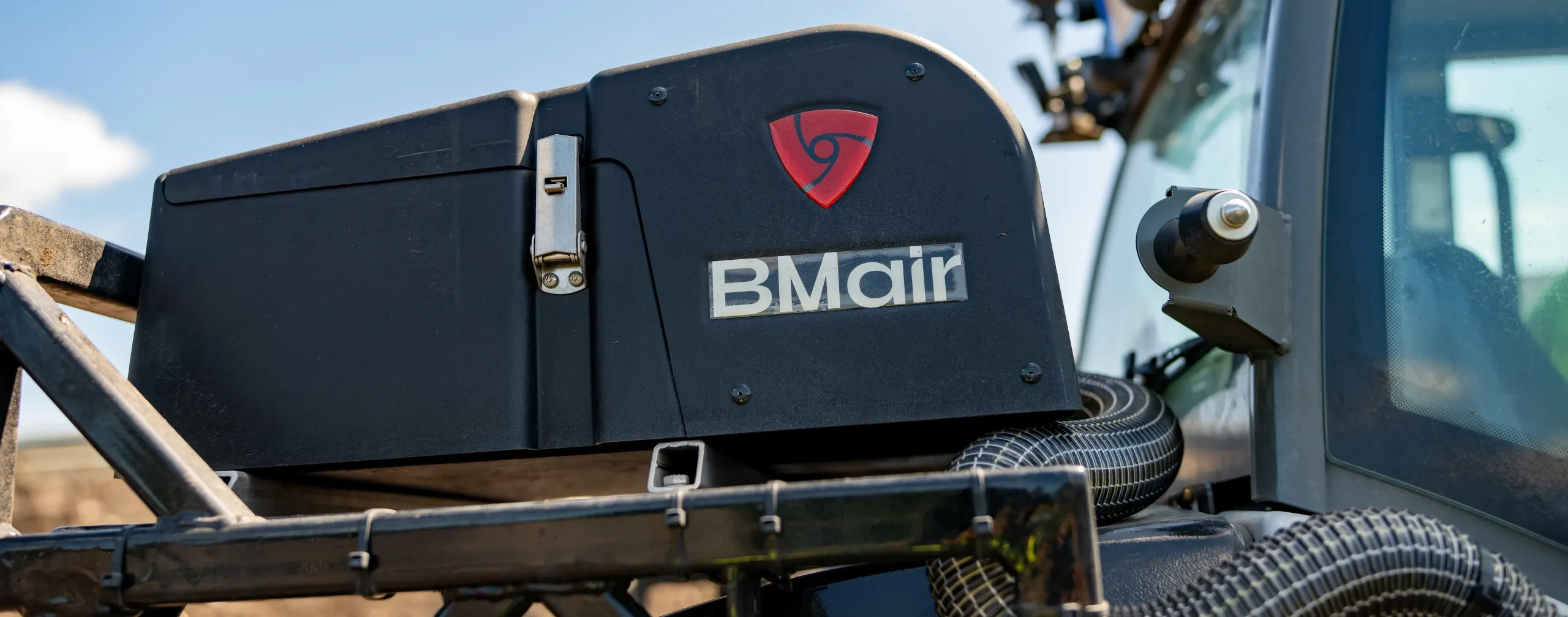
- Modern protective ventilation systems draw outside air through pre-filters and HEPA H13 filters to remove dust and bioaerosols, then through activated carbon gas filters configured to adsorb ammonia and other vapours, before supplying clean air under positive pressure to the cabin. The fresh air delivered to operators is substantially cleaner than the ambient atmosphere.
- Positive pressure (filter overpressure systems) are crucial for cabin protection. By maintaining cabin pressure above ambient, contaminated air is prevented from entering through door seals, cable pass-throughs or small gaps. This only works if the cabin is reasonably tight and regularly inspected for seal integrity.
- BMair International B.V. develops modular cabin pressurisation units, including the Protector and MAO-3C systems, with configurable combination filters designed to manage contaminants including ammonia, hydrogen sulphide, silica dust and diesel emissions. Systems are engineered for a wide range of heavy machinery and support compliance where applicable.
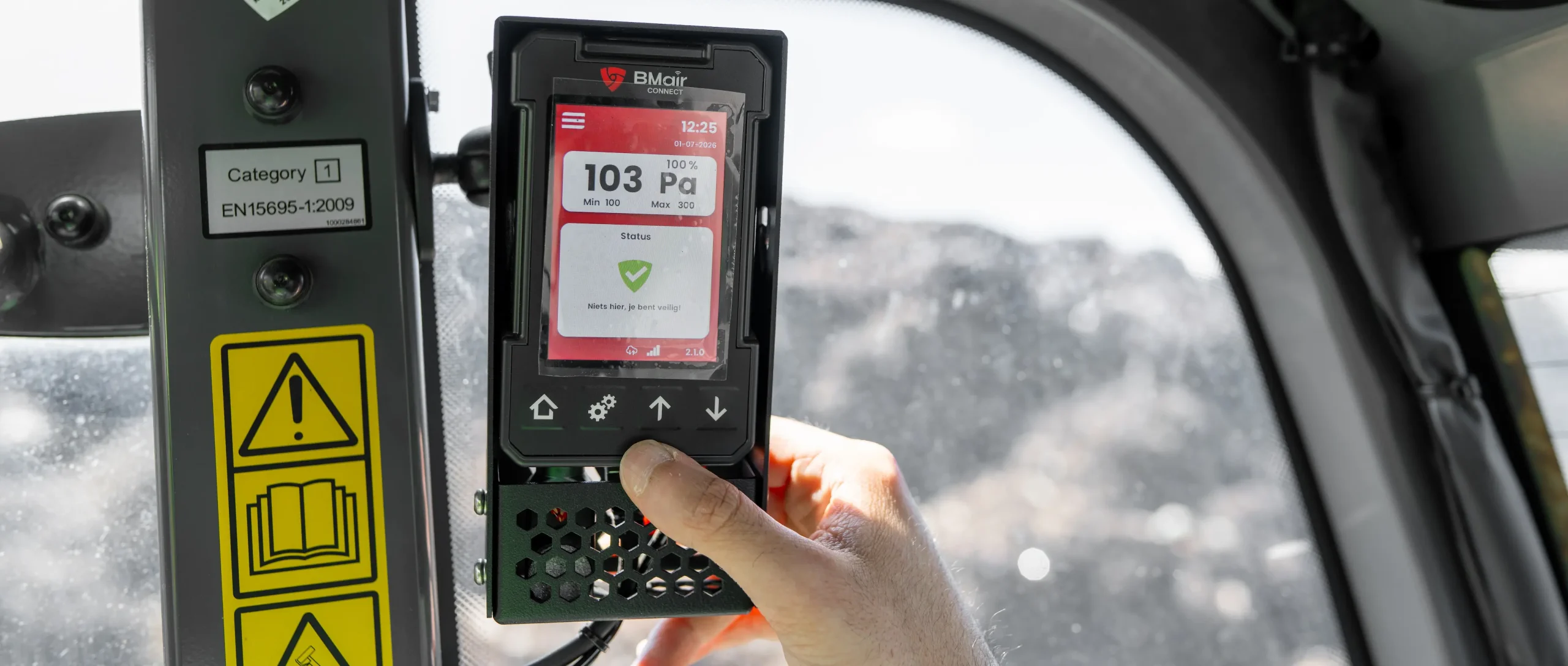
- Intelligent monitoring plays a critical role. BMair Connect provides continuous logging of cabin overpressure, filter condition and airflows, with remote dashboards for fleet-wide oversight. RFID-based filter recognition ensures the correct filter package is installed, and alarms trigger when conditions approach compliance limits. This level of verification transforms cabin protection from a passive measure into an actively managed, auditable control.
Monitoring, maintenance and verification of cabin air protection
Even the best cabin system will underperform if filters are saturated, seals are damaged or pressure is not regularly checked. Systematic monitoring and maintenance are non-negotiable.
- Daily operator checks: Visual inspection of the protective ventilation unit, confirmation of green status on pressure indicators or digital displays, and immediate reporting of any odour ingress, fogging or visible dust inside the cabin. If an operator detects ammonia's pungent odor inside the cab, the system needs immediate attention.
- Planned maintenance: Filter replacement based on operating hours and monitored saturation, inspection of cabin sealing and door gaskets, leak tests and pressure decay tests, with all documentation stored for audit purposes. Filter life varies depending on outdoor ammonia concentrations, humidity, co-contaminants and operating hours.
- Connected monitoring platforms such as BMair Connect Portal automatically log pressure, airflow and filter status data, generate alerts for deviations, and provide evidence during regulatory inspections or incident investigations. This removes reliance on manual record-keeping and reduces the risk of missed maintenance windows.
- Periodic validation by occupational hygienists is recommended, including measuring cabin concentrations of ammonia and other target gases during representative worst-case operations. This confirms that systems are achieving the desired protection factor and provides evidence for regulatory compliance.
Health surveillance, training and worker engagement
Ongoing health surveillance and training programmes help detect problems early and ensure that technical controls like cabin pressurisation are used correctly.
- Health screening: Baseline and periodic screening for high-risk worker groups should focus on respiratory function through pulmonary function tests (spirometry), eye health and skin integrity, interpreted by occupational health professionals. These assessments help identify chronic effects before they become disabling.
- Training topics: Workers must learn to recognise early respiratory symptoms of ammonia exposure, understand safe handling of ammonia solutions and ammonium-based fertilisers, perform cabin operation checks and know emergency evacuation routes.
- Worker engagement: Encourage operators to report near-misses, unusual odours, or cabin performance issues using simple reporting tools linked to maintenance and HSE teams. Front-line insight is invaluable for catching issues before they become incidents.
- Integrated approach: Ammonia exposure control should be integrated into broader programmes covering dust (such as silica), diesel particulate matter, biological agents and volatile organic compounds to reinforce a coherent approach to all airborne risks.
How BMair supports organisations in controlling ammonia and mixed gas exposure
BMair International B.V. works with fleet owners, HSE managers and OEMs to design protective ventilation solutions tailored to specific contaminant profiles, including ammonia. The approach is application-driven: understanding the site, the tasks and the contaminant mix before specifying equipment.
- BMair assesses applications such as composting plants, biogas facilities and waste transfer stations to specify the right combination of HEPA H13 dust filtration and activated carbon gas filters for ammonia and co-contaminants like hydrogen sulphide and VOCs. Filter packages are selected and tested for the specific gas mixture and concentration range present on site.
- Systems are engineered for integration with a wide range of heavy machinery. Modular units like the Protector series and MAO-3C Cab Guard provide positive pressure, filtration and monitoring that support compliance with standards including ISO 23875 where applicable. Original replacement filters and certified combination filter packages ensure continued performance.
- The BMair Connect ecosystem - on-machine control units and cloud portal - gives HSE and fleet managers fleet-wide visibility of cabin overpressure, filter status and alarm events. This simplifies documentation for regulators, clients and internal audits, and enables proactive maintenance scheduling.
Conclusion
Exposure to ammonia is a foreseeable risk in many industrial, agricultural and waste-handling environments, with the potential for severe acute injury and chronic respiratory problems if not properly controlled. The evidence is clear: from biogas facilities to composting tunnels, operators face real and measurable risks that demand real and measurable controls.
- Effective control strategies blend process design, ventilation, PPE and - crucially for heavy equipment operators - robust cabin pressurisation and filtration backed by intelligent monitoring and regular verification. No single measure is sufficient; the hierarchy of controls must be applied comprehensively.
- HSE, fleet and procurement managers should review their current controls, compare them against regulatory guidance and standards such as ISO 23875, and prioritise upgrades where cabin air quality is not demonstrably within safe limits. Documentation and data logging are essential for both compliance and continuous improvement.
- For specialist advice on protective ventilation system design and ammonia-specific filter packages, contact BMair International B.V. As a technical partner with deep expertise in cabin air quality across high-risk industries, BMair can help organisations move from reactive compliance to proactive protection.
Frequently Asked Questions about ammonia exposure and cabin protection
This FAQ addresses practical questions that HSE and fleet managers frequently raise about ammonia exposure control and cabin protection for heavy equipment operators.
How can I tell if my operators' cabins are adequately protected against ammonia?Adequate protection requires a dedicated protective ventilation system with gas-phase (activated carbon) filtration rated for ammonia, verified positive cabin pressure, no detectable ammonia odour inside the cabin during operations, and documented filter change and pressure-test records. If operators report throat irritation, eye watering or any hint of ammonia's pungent odor while working with the cab sealed, the system requires immediate investigation.
- Periodic air sampling inside cabins during worst-case tasks is essential to confirm ammonia levels remain well below legal limits and internal company targets. If sampling reveals levels approaching the TWA, adjust filter configurations, increase filter change frequency, or investigate cabin seal integrity. Continuous monitoring systems such as BMair Connect provide real-time assurance between formal sampling events.
No. HEPA filters remove particles, not gases. Ammonia requires activated carbon filtration specifically designed for ammonia. That's why protective ventilation systems combine HEPA filtration with activated carbon filters.
What is the difference between ammonia exposure and hydrogen sulphide exposure in biogas and waste environments?
Ammonia is an alkaline, highly water-soluble, strongly irritant gas that primarily causes chemical burns to the respiratory tract, eyes and skin. Hydrogen sulphide (H₂S) is a highly toxic, neuro-respiratory poison that can cause sudden loss of consciousness at high concentrations, with dangerous olfactory fatigue occurring at lower levels. Many anaerobic digestion and sludge-handling sites have both gases present simultaneously.
- Cabin protection and gas monitoring strategies must be designed for the full gas mixture, not just one contaminant. Filter packages and alarm setpoints differ for each gas. Activated carbon media effective for ammonia may not be optimal for H₂S and vice versa, which is why site-specific filter specification is critical.
There is no universal fixed schedule. Replacement intervals depend on outdoor NH₃ concentrations, presence of other gases competing for adsorption sites on the carbon, total operating hours, and ambient humidity and temperature. Higher ammonia concentrations and humid conditions generally accelerate filter saturation.
- The most reliable approach combines manufacturer guidance, operating-hour counters, performance monitoring through platforms like BMair Connect (which generates alerts based on real-time pressure and filter condition data), and periodic workplace air measurements inside the cabin. Together, these inputs allow you to define a site-specific replacement regime that balances cost against protection.