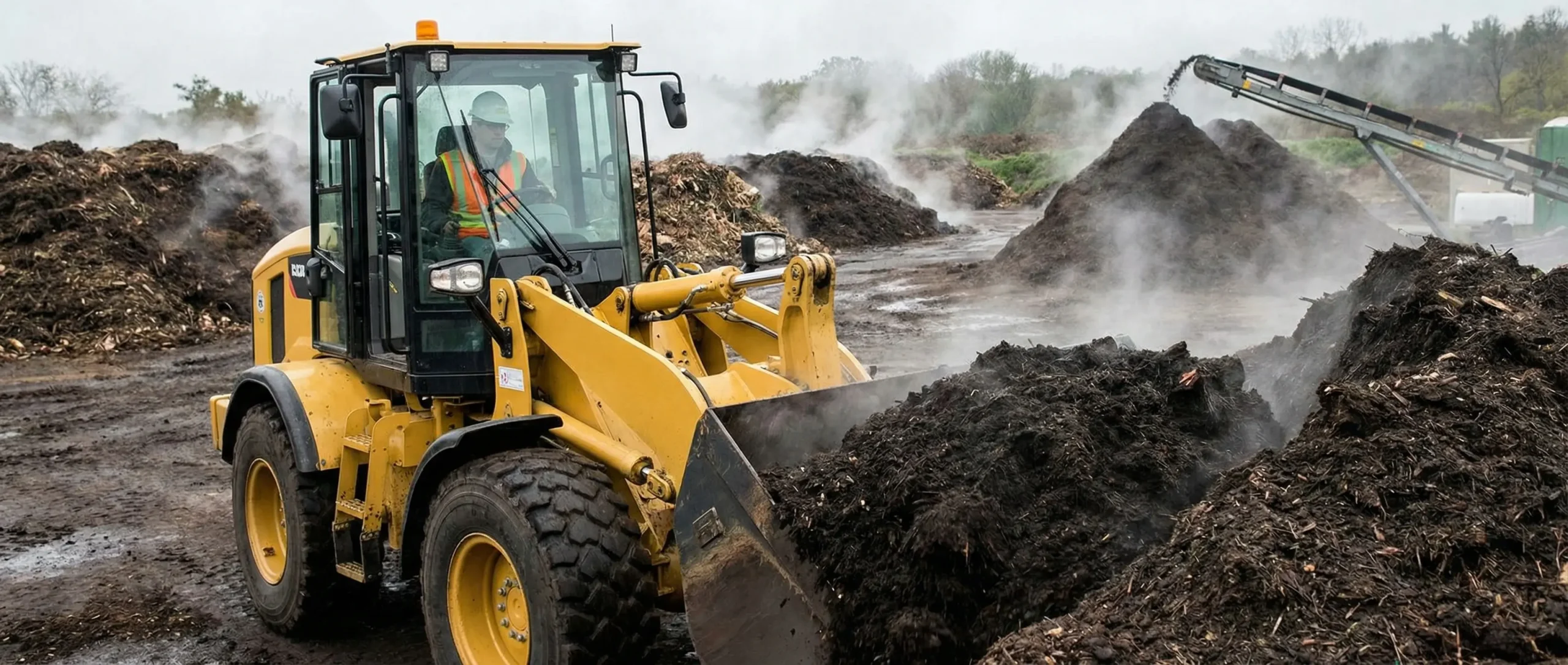
Bioaerosols composting environments are increasingly recognised as a significant occupational health concern across the UK waste management sector. Whilst composting facilities play an essential role in sustainable waste processing and the circular economy, the composting process itself generates airborne biological particles that can present serious health risks to workers, particularly machine operators.
For employers operating a green waste facility or involved in green waste composting, understanding bioaerosol exposure, regulatory expectations, and effective control measures is essential. This article explores the health impact of bioaerosol emissions, current guidance in England and the UK, and how engineering controls can significantly reduce occupational exposures inside machinery cabins.
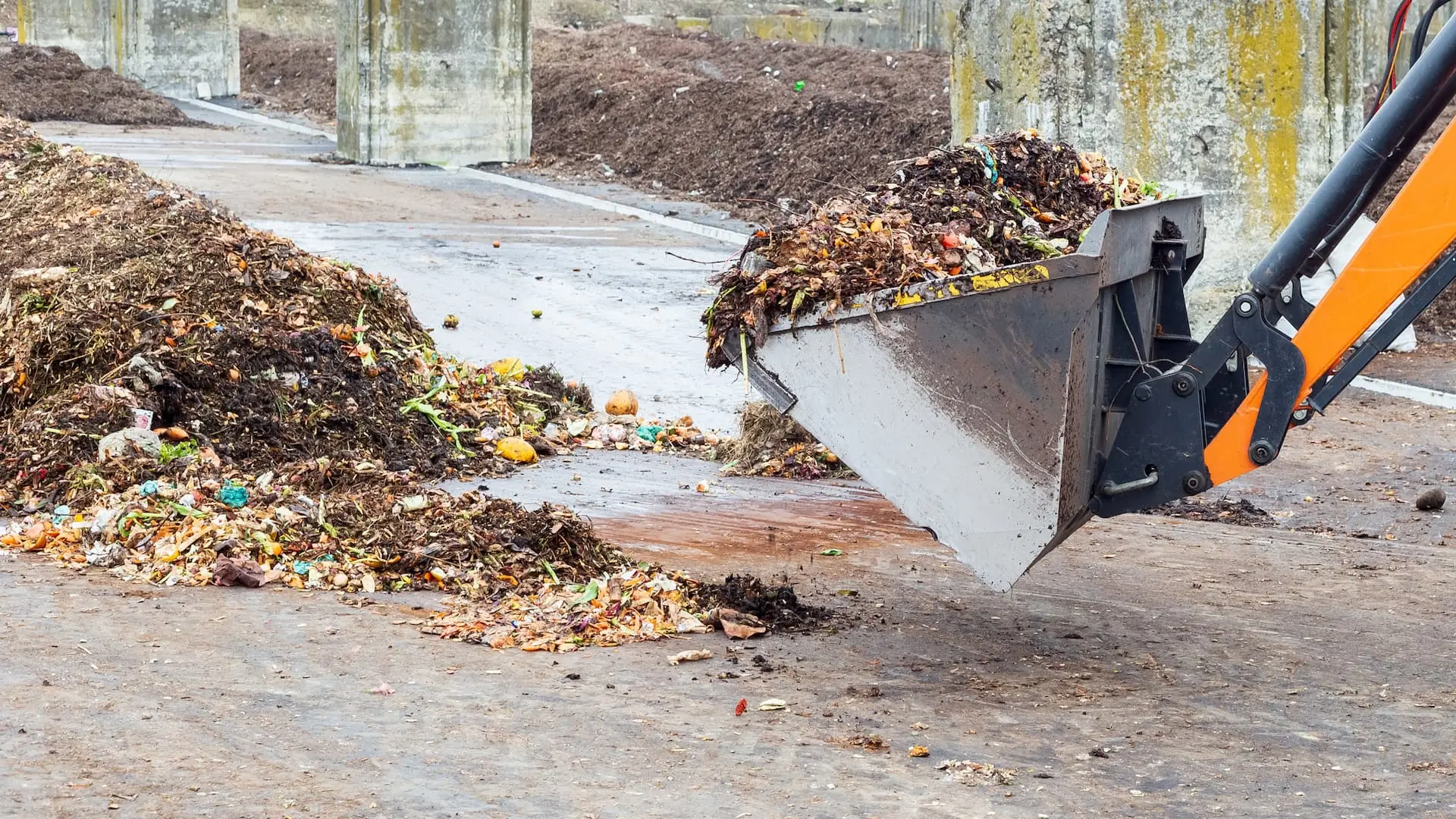
Bioaerosol exposure and human health
The primary concern in composting facilities is occupational bioaerosol exposure. Machine operators working on site for extended shifts may inhale airborne microorganisms repeatedly throughout the day.
Potential health effects linked to bioaerosols composting environments include:
- Respiratory irritation
- Hypersensitivity pneumonitis
- Occupational asthma
- Immune system inflammation
- Increased susceptibility to infection
- Long-term chronic respiratory conditions
Research conducted by universities and industry associations has demonstrated that elevated endotoxin concentrations and fungal spores such as Aspergillus fumigatus can affect human health, particularly in enclosed or poorly ventilated areas.
Whilst the Environment Agency position statement and interim guidance often focus on people living near composting sites, it is important to recognise that workers on site may experience higher and more frequent exposure levels due to proximity to active source terms.
Understanding bioaerosol emissions in composting facilities
Bioaerosol releases are not uniform across a site. Spatial variations occur depending on operational activity, weather conditions, material type and site layout.
Studies evaluating passive and active sampling strategies have shown that bioaerosol concentrations fluctuate throughout the composting process. Dispersal patterns are influenced by wind, temperature and moisture, and endotoxin and microbial cell levels are often highest near turning operations. Source depletion curves demonstrate concentration reduction with distance from active composting areas.
However, most evidence base research has focused on environmental pollution and community impact rather than detailed occupational exposure inside machinery cabins.
This creates a knowledge gap, particularly regarding machine operators who spend prolonged periods within cabs operating loaders.
Risk assessment in composting facilities
Under UK health and safety law, employers must conduct suitable and sufficient risk assessment procedures to evaluate bioaerosol exposure. Improved risk assessments should consider the nature of the composting process, active and passive source terms, bioaerosol sampling strategies, spatial variations on site, exposure duration for workers, monitoring frequency and the effectiveness of control measures in place.
Permit applicants for new composting facilities must often provide evidence of acceptable levels of bioaerosol emissions as part of Environment Agency requirements. However, internal cabin air quality is not always evaluated with the same depth as external site emissions. A robust risk assessment should therefore include not only site-wide bioaerosol concentrations, but also the quality of air inside machinery cabins where workers are continuously present.
Why machine operators are at higher risk
There is a common assumption that machine cabins offer adequate protection. In reality, many standard OEM cabins are not designed specifically for bioaerosol exposure control.
Over time, wear and tear can create small gaps in seals and panels. HVAC systems may draw external air directly into the cabin. Without verified positive pressure and high-efficiency filtration, airborne microorganisms can infiltrate the operator environment.
In green waste composting and waste management operations, this means operators may be exposed to elevated bioaerosol concentrations, increased endotoxin levels, Legionella species and Aspergillus fumigatus spores. Whilst site-level monitoring may demonstrate compliance in open air, the absence of engineered cabin protection can still result in significant occupational exposures.